

Budget Planning Dallas: Finance Leadership in CFOs
CFOs must balance rigorous, formal budget processes with the agility needed for dynamic markets
Effective budgeting and forecasting for CFOs requires rolling forecasts instead of static annual budgets, scenario planning for economic volatility, and driver-based models tied to real business activity. Middle-market finance leaders should integrate AI and automation to reduce manual work, freeing time for strategic analysis. FEI Dallas connects North Texas finance executives through peer programming addressing these exact priorities.
Key Takeaways

- CFOs balance rigorous formal processes with market agility to shape organizational financial discipline and strategic direction.
- Modern budgeting requires equal focus on transparency and accuracy for informed decision-making across all departments.
- Budget planning allocates resources, sets priorities, and defines company operations over future periods systematically.
- CFOs now connect planning beyond annual budgets to anticipate challenges and enable resource effectiveness.
What Separates Budgeting From Forecasting?

Budgeting sets fixed spending targets for a period; forecasting adjusts projections as new data arrives. Financial planning, budgeting, and forecasting function as separate disciplines, each with its own purpose, yet CFOs and FP&A leaders lose ground when they treat them as interchangeable. A budget sets resource allocation for the year, while a forecast adjusts to reflect changing conditions.
Disciplined budgeting works best when paired with continuous forecasting rather than left as a once-a-year exercise. A well-built budget combined with a flexible forecast gives finance teams stability during rapid growth and cover during economic uncertainty. Neither tool alone protects a company from surprises; together, they do.
Why does forecasting matter more now for CFOs?
Forecasting practices exist because static plans age quickly. An effective forecast improves decision-making around fiscal discipline and keeps resource delivery on track even as revenue or costs move unexpectedly.
How do budgeting and forecasting work together?
Combined insights help leaders make informed calls, spot risks early, and allocate resources with precision. Consider the practical differences:
- Budget: Fixed target, set annually, measures performance against a plan.
- Forecast: Rolling estimate, updated frequently, measures trajectory against current conditions.
- Scenario planning: Stress-test both against best-case, worst-case, and base-case outcomes.
Used together, these tools anticipate challenges before they become losses.
How Should CFOs Structure the Budget Process?
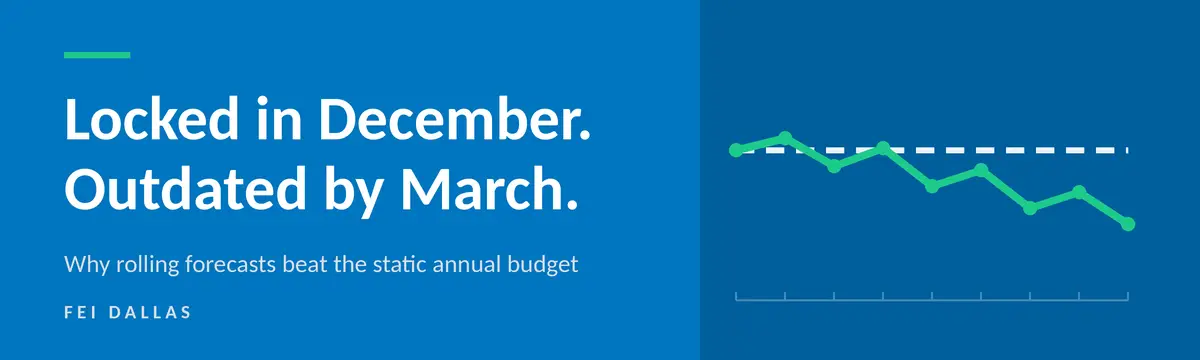
Structure demands a dual discipline: formal rigor paired with real agility. CFOs who succeed treat budget planning conversations as living frameworks, not annual paperwork exercises. Markets shift fast, and a budget locked in December often looks outdated by March.
Effective budget planning starts with a foundation, not a spreadsheet. Clear timelines matter. Achievable targets matter more. Every stakeholder, from department heads to the executive team, needs to understand deadlines and expectations from day one. None of this works without genuine partnership between finance and business leaders. That collaboration is what ultimately drives value creation.
What makes a budget process "modern"?
A modern process treats finance as a strategic partner, not a back-office function that simply tracks spending. Transparency and accuracy carry equal weight, and both feed decisions that drive growth rather than just report on it.
Why does this matter more for mid-market companies?
Resources run leaner in mid-market organizations, leaving little room for waste. An optimized budget process becomes a competitive necessity, not a discretionary upgrade.
Practical structure includes:
- Setting firm submission deadlines with built-in review cycles
- Assigning ownership of targets to specific business leaders
- Building revision checkpoints tied to forecasting cycles
CFOs benefit from peer networks and programming built around these exact structural challenges, such as those FEI Dallas offers to North Texas finance leaders, giving CFOs a real return on the time they invest in improving process.

Why Must Forecasting Stay Dynamic and Strategic?

Static, once-a-year forecasts no longer meet the demands placed on finance leadership. Modern CFOs must connect planning directly to business strategy, adjust projections in real time, and lead decisions with live data rather than assumptions locked in months earlier. Forecasting for CFOs now functions as an ongoing strategic discipline, not a once-a-year filing exercise.
Technology investment explains much of this shift. A majority of CFOs plan to increase tech-related spending. The large majority expect higher AI budgets with no planned cuts to AI investment. That trend makes budgeting more complex, but it also makes the forecast more central to overall company performance.
What's driving the need for constant reforecasting?
Economic volatility and fast-moving technology change are pushing CFOs to rethink where their time and attention go. Finance leaders now prioritize AI, automation, and talent decisions ahead of routine reporting tasks.
How should finance teams respond?
Teams should treat forecasting as a living process:
- Revisit assumptions monthly, not annually
- Tie technology spending directly to measurable outcomes
- Build scenario planning into every major budget cycle
This approach, central to disciplined budgeting and planning practices, keeps finance strategic rather than reactive.
Effective budgeting and forecasting demand a disciplined approach grounded in rigorous analysis and strategic alignment. By integrating scenario planning, leveraging data-driven insights, and fostering cross-functional collaboration, CFOs position their organizations to navigate uncertainty with confidence. The discipline required today—combining historical perspective with forward-looking strategy—distinguishes leaders who merely react from those who drive sustainable competitive advantage. Your commitment to these practices directly strengthens organizational resilience and financial performance.
FAQ
What is the main difference between budgeting and forecasting?
A budget sets fixed spending targets for a period. A forecast adjusts projections continuously as new data arrives, keeping pace with shifting conditions.
Why should CFOs use rolling forecasts instead of static annual budgets?
Static plans age quickly. Rolling forecasts improve decision-making around fiscal discipline, keeping resource delivery on track as revenue or costs move unexpectedly.
What makes a budgeting process "modern" for CFOs?
A modern process treats finance as a strategic partner rather than a back-office function, prioritizing transparency and accuracy for informed decisions across all departments.

Leave a Reply